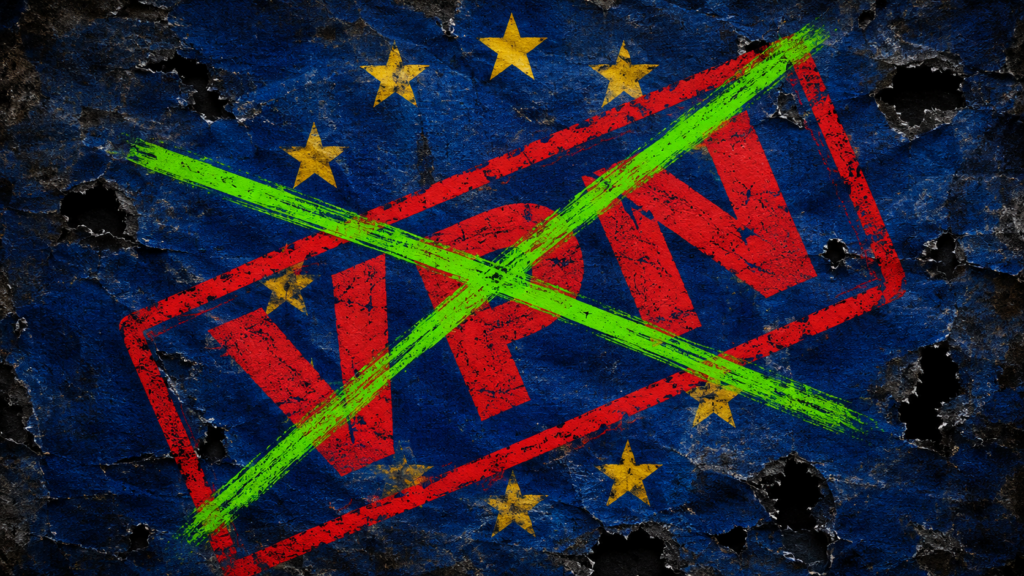
The End of VPNs, EU Regulation 2026—What Does This Mean for You? No More Anonymity—Everything Is Being Monitored!
Introduction
Since the beginning of 2026, reports have been circulating in hosting and privacy communities claiming that the EU wants to crack down on anonymous VPS servers (“Virtual Private Servers”). In particular, stricter identity verification (KYC), logging obligations, and new security requirements under the NIS2 Directive are being heavily discussed.
An official “VPS ban” has not yet been published as a standalone law. However, through NIS2, national implementation laws, and new compliance requirements, anonymous or no-KYC hosting offers inside the EU are increasingly being restricted in practice.
The effects are already visible:
- Hosting providers are introducing identity verification
- WHOIS privacy is being partially removed
- Security logging is becoming mandatory
- Providers are tightening checks for new customers
- Privacy-focused users are moving toward offshore providers
What Is Behind the Current Development?
The Main Foundation: NIS2
At the center of the debate is the European Union’s “NIS2 Directive”.
NIS2 (“Network and Information Security Directive 2”) massively expands cybersecurity obligations for operators of digital infrastructure. This includes:
- Hosting providers
- Cloud providers
- DNS services
- Data centers
- Domain registrars
The directive obligates EU member states to introduce stricter security and control mechanisms.
Source:
- European Commission:
https://digital-strategy.ec.europa.eu/en/policies/nis2-directive
Why VPS Providers Are Affected
Officially, the tightening of regulations is primarily justified as protecting society and improving digital security.
In political statements and government documents, the following points are repeatedly mentioned:
- Protection of children and minors
- Combating child abuse material
- Anti-money laundering measures
- Counter-terrorism efforts
- Fighting cybercrime
- Protection of critical infrastructure
- Preventing anonymous criminal networks
This type of argumentation is typical for new EU digital security legislation.
Critics, however, argue that under these justifications the EU is gradually pushing back anonymous internet usage.
Especially within privacy and hosting communities, many believe these measures are officially marketed as:
- Child protection
- Counter-terrorism
- Anti-money laundering
- Cybercrime prevention
while practically resulting in:
- more surveillance
- mandatory identification
- less anonymity
- increased data collection
- centralized control
At the same time, authorities also point to classic cybercrime areas such as:
- Botnets
- Phishing
- Malware hosting
- Spam infrastructure
- DDoS attacks
- Fraud networks
as justification for stricter controls on hosting and VPS providers.
Several European providers have already reacted.
Changes Already Becoming Visible
1. KYC Checks at Hosting Providers
According to multiple industry reports, European hosting providers are now introducing mandatory identity verification systems.
This especially affects:
- new customers
- cryptocurrency payments
- larger VPS packages
- dedicated servers
One frequently mentioned example is Hetzner.
According to industry reports, Hetzner is now working with the identity verification provider “iDenfy”.
Source:
- WebHosting.Today:
https://webhosting.today/2026/03/26/nis2-is-reshaping-hosting-whether-you-are-ready-or-not/
2. Removal of WHOIS Privacy
According to reports, the German hosting and cloud provider IONOS removed WHOIS privacy options for business domains.
The reason is reportedly linked to new national NIS2 implementation requirements.
Source:
- WebHosting.Today:
https://webhosting.today/2026/03/26/nis2-is-reshaping-hosting-whether-you-are-ready-or-not/
3. Mandatory Logging and Security Records
Hosting panels and server software are already reacting as well.
Reports state that Plesk introduced a special “NIS2 Compliance Mode” where security logs can no longer be disabled.
This means:
- increased traceability
- longer data retention
- reduced anonymous usage
Source:
- WebHosting.Today:
https://webhosting.today/2026/03/26/nis2-is-reshaping-hosting-whether-you-are-ready-or-not/
Who Is Driving This Regulation?
European Commission
The main political institution behind the new cybersecurity rules is the European Commission.
Especially relevant:
Henna Virkkunen
EU Commissioner for technological sovereignty, security, and democracy.
She is considered one of the key political figures behind the EU cybersecurity strategy.
Source:
- European Commission:
https://commission.europa.eu/about/organisation/college-commissioners/henna-virkkunen_en
ENISA
The “European Union Agency for Cybersecurity” (ENISA) supports the implementation of NIS2 on a technical and organizational level.
The agency develops:
- security standards
- risk models
- compliance recommendations
- technical guidelines
Source:
National Governments
The actual implementation happens through national legislation.
Especially active countries include:
- Germany
- France
- Netherlands
- Austria
As a result, requirements may differ between EU member states.
What Impact Does This Have on Users?
Less Anonymity
The biggest effect concerns privacy.
Many users currently use VPS servers:
- pseudonymously
- with cryptocurrencies
- without ID documents
- with minimal customer data
New requirements could soon make the following mandatory:
- ID verification
- address information
- phone numbers
- identity matching
Higher Costs
Compliance costs money.
Hosting providers now need to:
- store logs
- conduct audits
- expand security measures
- hire additional staff
- implement reporting systems
These costs will likely be passed on to customers.
Increased Data Retention
NIS2 increases pressure on providers to store usage data and security-related records.
Privacy-oriented models such as:
- “No Logs”
- “No KYC”
- anonymous registration
are becoming increasingly difficult inside the EU.
Shift Toward Offshore Hosting
Many users are already moving to providers outside the EU.
Frequently discussed locations include:
- Moldova
- Russia
- Seychelles
- Panama
- Asian hosting locations
Hosting forums and privacy communities have increasingly discussed “No-KYC hosting” for months.
Sources:
- Privacy Guides Forum:
https://discuss.privacyguides.net/t/what-are-some-good-vps-hosting-provider-recommendations/34686 - LowEndTalk:
https://lowendtalk.com/discussion/215660/looking-for-cheap-vps-in-europe
Critical Voices
Critics warn that the new rules may:
- weaken privacy
- make investigative work harder
- endanger whistleblowers
- pressure journalists
- reduce general internet anonymity
Supporters argue instead that:
- cybercrime must be fought
- critical infrastructure requires stronger protection
- hosting providers need tighter oversight
Current Situation in May 2026
At the moment, there is no complete EU-wide ban on VPS servers.
What is clearly visible, however, is that:
- anonymous VPS usage is increasingly restricted
- KYC obligations are expanding
- logging requirements are growing
- hosting providers are becoming more heavily regulated
- NIS2 is significantly reshaping the European hosting market
This especially affects:
- privacy projects
- anonymous infrastructure
- independent hosting providers
- offshore-style services operating inside Europe
Official Political Framing by the EU
Officially, the tightening of regulations is mainly justified as protecting society and digital security.
Political statements and government papers regularly reference:
- protection of children and minors
- combating child abuse material
- anti-money laundering
- counter-terrorism
- fighting cybercrime
- protecting critical infrastructure
- preventing anonymous criminal networks
This framing is common in new EU digital security legislation.
Critics argue that under these justifications, anonymous internet use is gradually being reduced.
Especially in privacy and hosting communities, many believe the measures are publicly sold as:
- child protection
- anti-terrorism
- anti-money laundering
- cybercrime prevention
while practically resulting in:
- more surveillance
- mandatory identification
- less anonymity
- stronger data collection
- centralized control
At the same time, authorities continue pointing to classic cybercrime issues such as:
- botnets
- phishing
- malware hosting
- spam infrastructure
- DDoS attacks
- fraud networks
as justification for stricter oversight of hosting and VPS providers.
Conclusion
2026 marks a turning point for European hosting.
Through NIS2 and national security laws, the EU is significantly increasing pressure on hosting and cloud providers. While cybersecurity and the protection of critical infrastructure are officially presented as the main goals, many users see these developments as the gradual end of truly anonymous VPS servers within the EU.
Especially affected are providers and users who previously relied on:
- No-KYC hosting
- cryptocurrencies
- minimal data retention
- pseudonymous infrastructure
Whether this will ultimately become a de facto ban on anonymous VPS services depends on how aggressively EU member states interpret and enforce NIS2 requirements in the future.
Sources
European Commission – NIS2:
https://digital-strategy.ec.europa.eu/en/policies/nis2-directive
European Commission – Henna Virkkunen:
https://commission.europa.eu/about/organisation/college-commissioners/henna-virkkunen_en
ENISA:
https://www.enisa.europa.eu/
WebHosting.Today:
https://webhosting.today/2026/03/26/nis2-is-reshaping-hosting-whether-you-are-ready-or-not/
Noack Hosting:
https://noackhosting.com/blog/nis2-hosting-compliance/
Privacy Guides Forum:
https://discuss.privacyguides.net/t/what-are-some-good-vps-hosting-provider-recommendations/34686
LowEndTalk:
https://lowendtalk.com/discussion/215660/looking-for-cheap-vps-in-europe

Support / Donation Link for the Channel
If my posts have been helpful or supported you in any way, I’d truly appreciate your support 🙏
#EU #NIS2 #VPS #VPN #Hosting #CyberSecurity #Privacy #NoKYC #InternetFreedom #DigitalRights #EURegulation #Surveillance #Cybercrime #Anonymity #KYC #OnlinePrivacy #NetPolitics